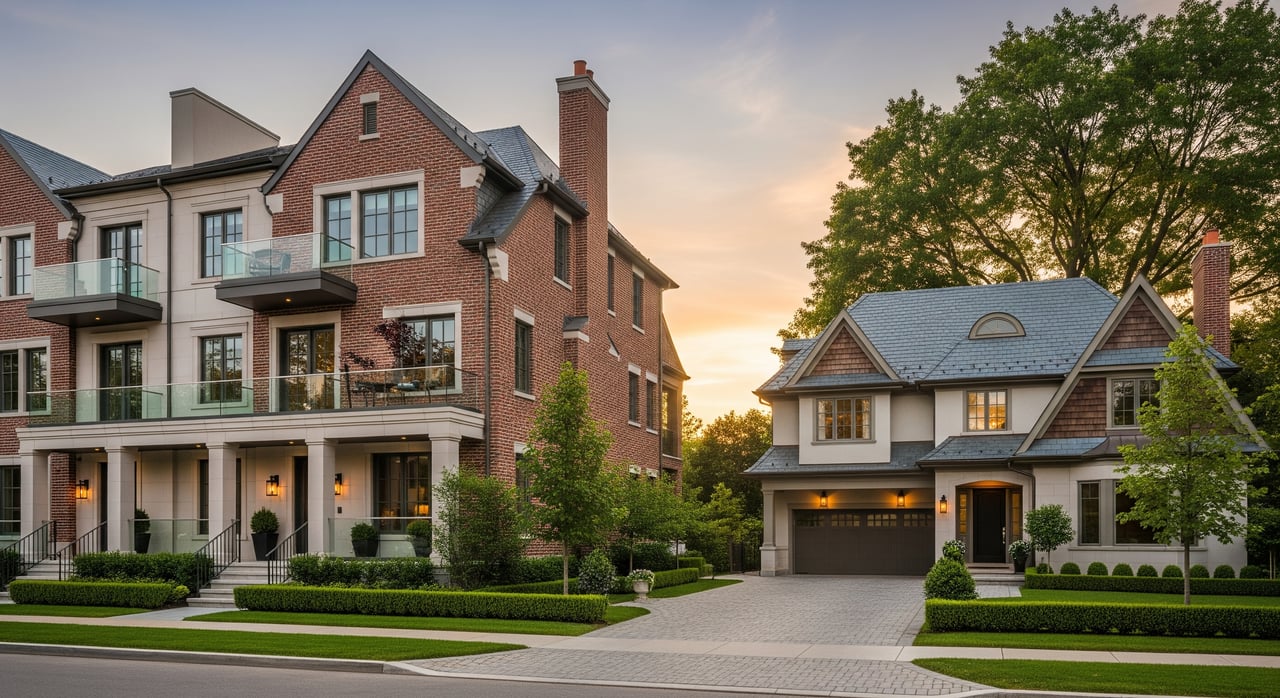
North Shore Townhome vs House: Which Fits Your Lifestyle?
January 1, 2026
January 1, 2026
Trying to decide between a townhome and a single-family home on the North Shore? You are not alone. Many buyers weigh convenience, cost, and lifestyle as they look at options in Highland Park and nearby suburbs. In this guide, you will learn how each choice compares on price, taxes, HOA rules, financing, space, maintenance, and resale. By the end, you will have a clear framework for choosing what fits your budget and day-to-day life. Let’s dive in.
The North Shore includes a mix of classic single-family homes on larger lots and attached housing near downtown areas and transit. Key corridors like the Metra Union Pacific North Line and I-94 shape demand and pricing. Townhomes often cluster near shopping and stations, while single-family neighborhoods spread farther from commercial areas.
Seasonality plays a role. Spring and early summer tend to see more listings and buyer activity. Inventory can be tight in areas with strong amenities and sought-after districts. For a specific address, local details such as proximity to parks, the lakefront, and Metra access can influence both value and time on market.
Different municipalities sit in Lake, Cook, and McHenry Counties. Each has its own tax rates, zoning, and rules. Always confirm the property’s city, county, and school district for accurate comparisons.
Detached single-family homes usually carry higher prices than townhomes in the same submarket because of land and overall square footage. That said, newer or well-located townhomes near downtown nodes or transit can overlap with, or even exceed, some entry-level detached prices. Condition, age, lot size, architectural character, and location near the lake or parks are core factors.
Your tax bill reflects assessed value, local tax rates, and exemptions. In the Chicago metro, taxes are a meaningful part of your monthly costs. Townhomes may have lower assessed values than similarly located detached homes, but this varies by unit size and development. You can review your tax history through the county assessor or treasurer and ask about common exemptions such as general homestead or senior exemptions. If a value seems high, ask your real estate attorney about the county’s assessment appeal process.
Most townhomes are part of a homeowners association or condominium association. Monthly assessments often cover exterior maintenance, landscaping, snow removal, insurance for common areas, and reserves. Fee levels vary widely based on services and amenities. Some single-family homes also have HOA dues, but many do not. Keep in mind that a lower tax bill on a townhome can be offset by HOA fees, while detached homes shift more maintenance costs directly to you.
Special assessments are one-time or short-term charges for capital projects such as roofs, siding, or paving. Review the association’s budget and reserve study to gauge the likelihood of future assessments.
“Townhome” describes the look, not the legal structure. You will encounter:
The form affects taxes, insurance, rules, and resale. Verify the legal structure through the deed, plat, and association documents.
During due diligence, request and read:
Red flags include very low reserves, planned or frequent special assessments, litigation, unclear maintenance responsibilities, and restrictive rental policies that could affect future flexibility.
Lenders underwrite condominiums differently than detached homes. They review the project’s budget, reserves, owner-occupancy ratio, and insurance. FHA and VA loans require condo project eligibility. Low reserves or high investor concentration can lead to higher down payments or limited loan options. For fee-simple townhomes and detached homes, standard conventional guidelines usually apply. Connect with a local lender early to confirm product availability for your specific property type.
Municipal zoning and building codes can influence additions, decks, garages, or exterior changes. Townhome associations layer on their own rules for exterior modifications. Many suburbs regulate short-term rentals. If you plan to rent now or later, confirm both municipal rules and any HOA restrictions before you buy.
Detached homes typically offer more interior space, basements, and storage options such as sheds or larger garages. Townhomes often provide efficient layouts and attached garages with less private storage. Think about your seasonal gear, hobby space, and work-from-home needs.
Shared walls in townhomes can mean more neighbor sound, depending on construction quality. Detached homes offer greater separation. Visit at different times of day to gauge noise levels inside and outside.
Townhome parking ranges from single bays to tandem or shared guest spots. Rules for visitor parking and street parking vary. Detached homes often have private driveways, multi-car garages, and more flexibility for guests. If outdoor living matters, detached homes offer yards for gardens, play space, and pets. Townhomes may have patios, smaller yards, or shared green spaces with rules for grills, fencing, or play equipment.
Older North Shore homes can feature architectural character and established neighborhoods, but they may need more upkeep. Newer townhomes can reduce near-term capital projects, though exterior changes are limited by HOA rules. If you plan to renovate, confirm municipal permits and association approvals early.
Detached homes typically draw buyers who value private yards, storage, and more flexibility. Townhomes attract buyers who want low-maintenance living near amenities and transit. In both cases, proximity to parks, the lake, and stations can support demand. Very high HOA fees without clear benefits can reduce buyer interest.
Rental rules come from the municipality and the HOA. Some associations cap rentals or have waitlists. Investor concentration can affect financing and pricing. If rental potential is important, confirm rules and owner-occupancy ratios during your attorney review.
Choose a townhome if you want:
Choose a single-family home if you want:
If you want a clear, side-by-side view of homes and townhomes that meet your budget, commute, and lifestyle, our team is ready to help. Get a tailored plan, vetted comps, and a step-by-step process for a smooth purchase or sale. To start, connect with Rafi Sahakian for a quick consult or request a complimentary home valuation.
October 22, 2026

October 15, 2026

October 8, 2026
October 1, 2026

September 24, 2026
September 17, 2026

September 10, 2026
September 3, 2026
August 27, 2026
Contact The Rafi Group today whether you are looking to purchase your next home, invest, sell your property or rent one, and allow him to provide you with exceptional, dedicated, and effective service that exceeds your expectations. They work with a dedicated professional team including attorneys, lenders, insurance agents, and certified inspectors.